May 18, 2026
Selecting the perfect surface for your kitchen is a transformative decision that blends architectural aesthetics with daily functional requirements. While the raw beauty of natural stone is undeniable, a successful installation requires meticulous planning and a deep understanding of the material's unique physical properties. This guide outlines the essential factors you must evaluate to ensure your new surfaces provide a lifetime of elegance and utility.
Understanding the Market Dominance of Natural Stone
Before diving into the technical specifications of your renovation, it is helpful to understand where this material stands in the broader landscape of home design. Its enduring popularity is not merely a trend but a reflection of its proven durability and the unique character each slab brings to a home. According to Grand View Research, a 2025 global countertop market report notes that granite countertops account for about 28% of total countertop market share in 2025, reflecting ongoing preference for natural stone in kitchens. This significant market presence ensures that homeowners have access to a vast network of experienced fabricators and a nearly infinite variety of colors and patterns to suit any architectural style.
Selecting the Perfect Slab at the Stone Yard
Unlike synthetic materials that are manufactured for uniformity, every piece of granite is a unique geological record shaped by millions of years of heat and pressure. You should never select granite countertops based on a small 4-inch sample in a showroom; instead, you must visit a stone yard to view the full slabs in person. Large-scale veining, pits, and "fissures"—which are natural separations between mineral crystals—can look dramatically different across a six-foot span than they do on a tiny swatch. Seeing the entire slab allows you to identify specific sections you want to highlight on your kitchen island and ensures that the overall movement of the stone aligns with your vision for the room.
Evaluating the Impact of Different Edge Profiles
The edge profile of your countertop serves as more than just a decorative finish; it influences the safety, cleaning requirements, and overall "feel" of your kitchen. Common options range from the simple "eased" edge, which offers a clean and modern look, to the elaborate profiles that lean toward a more traditional or formal aesthetic. When choosing granite countertops, consider that rounded edges are less prone to chipping from heavy pots and are generally safer in households with small children. Conversely, sharp, square edges provide a crisp architectural line but may require a bit more care during heavy usage to avoid minor impact damage.
Coordinating Cabinet Strength and Structural Support
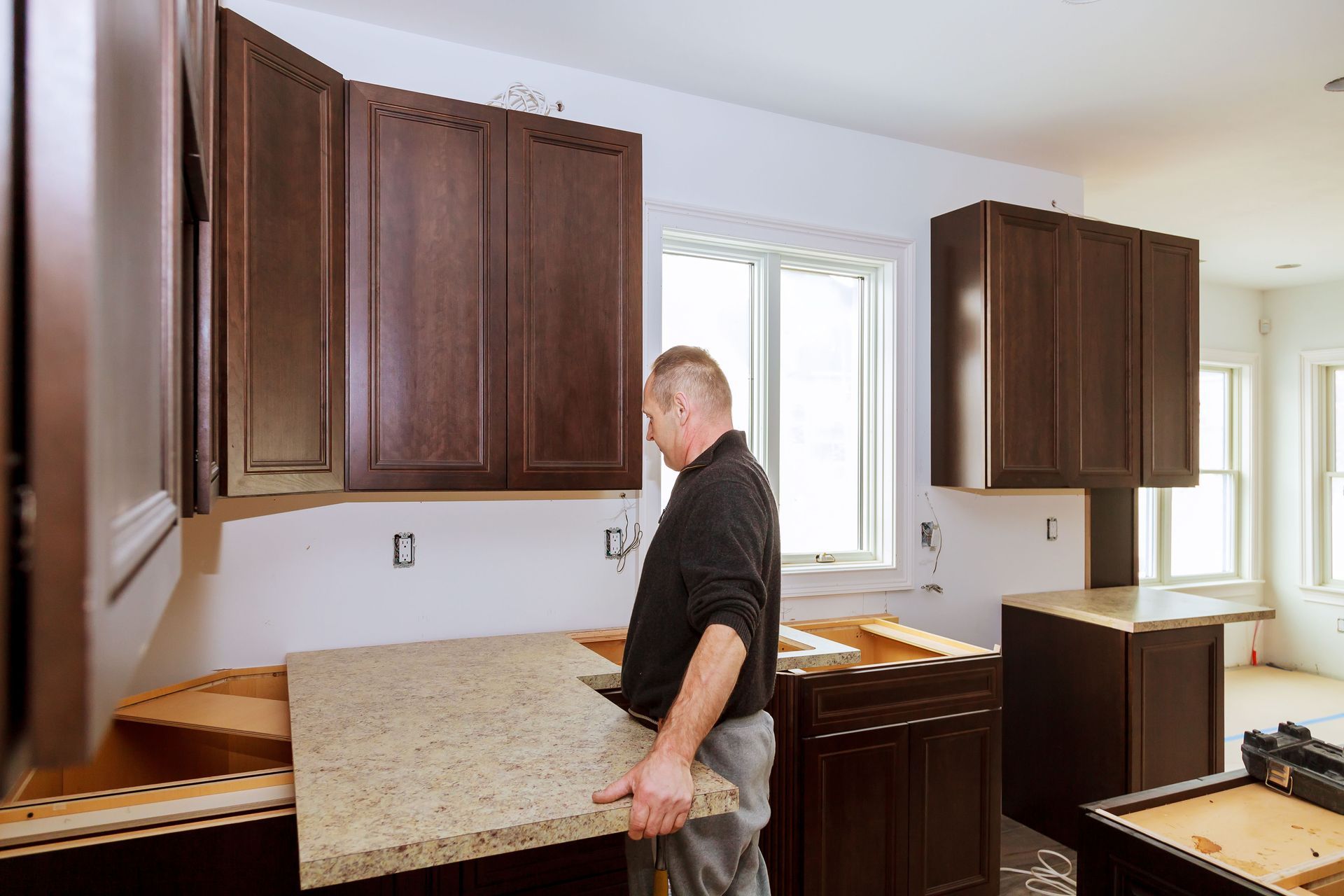
Natural stone is incredibly heavy, typically weighing between 18 and 22 pounds per square foot depending on the thickness of the material. Before the installation crew arrives, you must verify that your base cabinets are structurally sound, level, and securely anchored to the wall studs. While most standard modern cabinetry is designed to support the weight of granite counters, older cabinets or custom furniture pieces may require additional reinforcement or plywood sub-tops. Furthermore, if your design includes a significant overhang for a breakfast bar—usually anything exceeding 10 inches—you will need to budget for decorative brackets or hidden steel supports to prevent the stone from cracking under its own weight.
Planning the Placement of Seams and Joints
Unless you have a very small kitchen, your project will likely require at least one seam where two pieces of stone meet. The placement of these seams is a critical technical detail that should be discussed with your fabricator during the templating phase. Ideally, seams should be placed in inconspicuous areas, such as near sinks or cooktops where the length of the joint is minimized, or away from direct sunlight which can highlight the adhesive line. Expert fabricators use color-matched epoxy and specialized "seam setters" to make these transitions as tight and invisible as possible, ensuring that your granite countertops appear as a continuous, flowing surface rather than a collection of separate blocks.
Choosing the Right Finish for Your Lifestyle
The finish of the stone—polished, honed, or leathered—fundamentally changes both the appearance and the maintenance requirements of the surface. A polished finish is the most common, providing a high-gloss, reflective surface that makes colors pop and resists staining by sealing off microscopic pores. Honed finishes offer a matte, satin-like feel that is excellent at hiding scratches, though they may require more frequent sealing to prevent oil absorption. Leathered finishes are a newer trend, providing a textured, pebbled surface that hides fingerprints and water spots exceptionally well. Your choice should reflect how you use your kitchen; a high-traffic family hub might benefit more from a textured finish than a pristine, formal show-kitchen.
Assessing the Long-Term Maintenance and Sealing Requirements
One of the most persistent myths is that natural stone is difficult to maintain, but in reality, it simply requires a specific type of care to stay beautiful. Because it is a porous material, granite countertops must be sealed periodically—usually once every one to three years—to create a barrier against liquids like red wine, lemon juice, or cooking oils. You can easily test your seal by dropping a bit of water on the surface; if it beads up, the seal is strong, but if it soaks in and darkens the stone, it is time for a reapplication. Additionally, you should commit to using pH-neutral cleaners specifically formulated for stone, as generic glass cleaners or abrasive scouring pads can dull the polish and strip away the protective sealant over time.
Integrating the Sink and Appliance Cutouts
The way your sink and appliances integrate with the stone is a permanent decision that cannot be easily reversed once the material is cut. Under-mount sinks are the standard choice for granite counters because they allow you to wipe crumbs directly into the basin and showcase the beautiful polished edge of the stone cutout. You will need to provide your fabricator with the physical sink and the manufacturer’s specifications for any drop-in appliances, such as cooktops or trash compactors, well in advance.
Factoring in the Total Cost of Professional Installation
While the price per square foot of the material is the most visible cost, the total budget for a stone project includes several "hidden" labor and logistics fees. You should expect to pay for the initial templating, the precision CNC cutting at the fabrication facility, the polishing of the edges, and the final delivery and installation. Some companies also charge extra for "sink cutouts," "faucet hole drilling," and the removal and disposal of your old surfaces. By choosing a reputable provider for your granite countertops, you are paying for the expertise of craftsmen who know how to handle multi-hundred-pound slabs without breaking them, ensuring that the final fit is precise to within a fraction of an inch.
Investing in natural stone is a commitment to quality that significantly enhances both the functionality and the resale value of your property. By carefully selecting your slab, planning your structural supports, and understanding the maintenance cycle, you can avoid common pitfalls and enjoy a seamless installation. With the right preparation, your new kitchen surfaces will serve as a durable and breathtaking centerpiece for decades of home life. If you want to learn more about countertops, contact The Countertop Shop today to get started!